In transportation, discussions about major advancements are common, though often overstated or incremental. Occasionally, however, a development emerges that genuinely signals the arrival of the future.
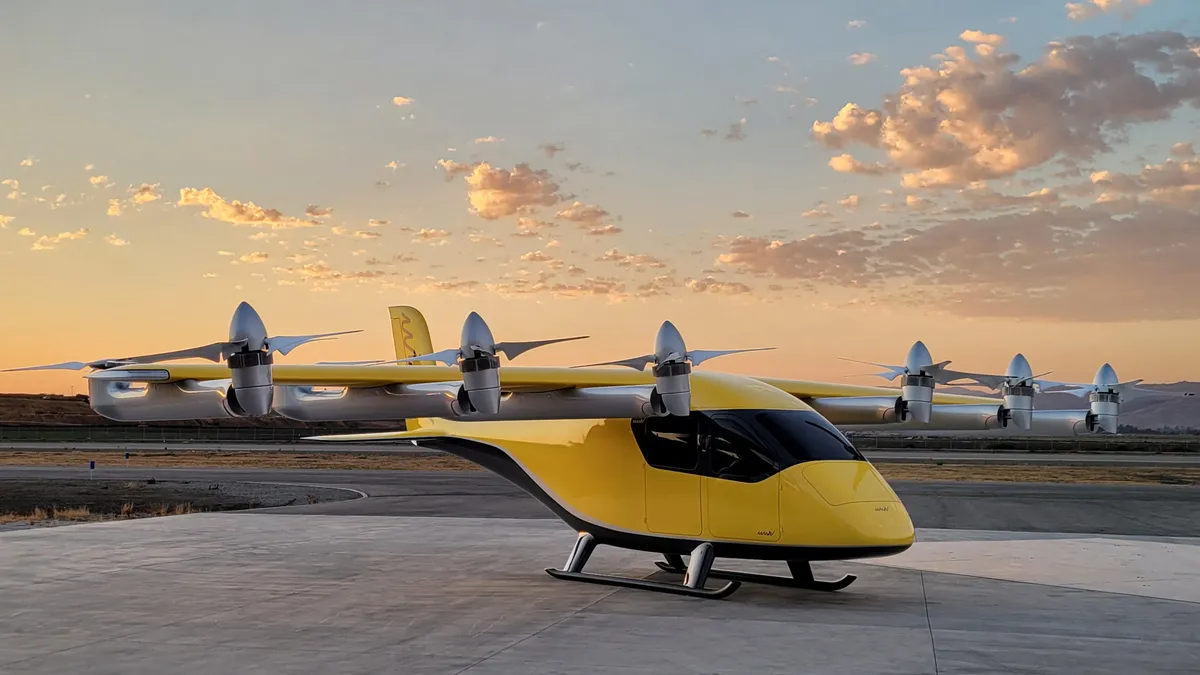
Wisk’s latest autonomous air taxi is more than a technological milestone. It demonstrates that the next era of transportation—autonomous, efficient, and scalable—is beginning now, with self-flying, four-seat electric aircraft designed to transform travel.
This shift is not a temporary trend; it marks a lasting change in how we envision air mobility.
Autonomy in the Air: A Different Playing Field
Wisk’s approach to autonomous air mobility stands out for two key reasons:
1. Built Self-Flying from Day One
Wisk designed its aircraft to be autonomous from the outset, eliminating the need for a cockpit or pilot.
This is not a retrofit solution.
This is not a stepping stone.
This is a definitive statement of intent.
By removing the pilot, Wisk unlocks:
- More usable passenger space
- Lower operational costs
- Greater scalability
- The ability to standardize fleets with software-first approaches
2. Safety Through Redundancy, Not Heroics
Traditional aviation relies on the human pilot as the primary redundancy. Wisk replaces this model with:
- Multiple independent flight-control computers
- Redundant propulsion and power systems
- Advanced detect-and-avoid sensors
- Real-time ground-based supervision
This safety architecture is based on principles from commercial aviation and autonomous vehicles, and it utilizes systems that do not experience fatigue, distraction, or overload.
The Public Trust Problem—and Why Wisk Is Tackling It Head-On
While autopilot is widely accepted in commercial aviation, the idea of routine flights without a human pilot on board represents a significant leap, and initial public hesitation is expected.
Wisk is addressing this by prioritizing:
- Transparency
- Standardized operations
- Certification aligned with FAA Part 135 autonomy paths.
- Controlled environments for early deployment
The company recognizes that adoption depends not only on technology, but also on trust, practical applications, and a proven safety record. For autonomous taxis to scale, the public must see them as an evolution of aviation, not merely as passenger drones.y This Matters for Cities, Freight, and the Future of Mobility
Autonomous air taxis are more than a novelty. They represent:
A Shift in Urban Efficiency
Short regional trips of 10 to 25 miles can be completed in minutes rather than hours. Congested cities gain a new dimension for transportation.
A Blueprint for Autonomous Freight
Pilotless passenger aviation is the most challenging aspect of aviation autonomy. If Wisk demonstrates this model can operate safely, the downstream impact on:
- Autonomous middle-mile delivery
- Port-to-warehouse air links
- Emergency response
- Humanitarian logistics
will be significant.
A Wake-Up Call for Regulators
As with connected vehicles and autonomous trucking, regulators must adapt quickly. The FAA’s ongoing work toward “powered-lift” certification is only the beginning.
The Industry Will Split Between Followers and Founders
Every technological revolution follows a pattern:
Some companies wait for the pathway. Others build the pathway.
Wisk belongs in the second category, similar to Tesla’s role in electric vehicles, SpaceX in reusable rockets, and early autonomous vehicle companies in on-road autonomy. While others pursue hybrid or piloted models, Wisk is fully committed to scalable, on-demand aviation.
Historically, bold initiatives are often rewarded.
My Take: This Is Bigger Than Air Taxis
Wisk’s aircraft represents a fundamental shift in perceptions of autonomy. Aviation is among the most regulated industries, and if advanced AI and redundant flight systems gain approval here, road autonomy will likely face less controversy.
This achievement represents the highest level of autonomy.
If pilotless flight in structured air corridors is trusted, extending that trust to driverless freight on DOT-managed V2X corridors becomes a logical progression.
Wisk isn’t just building an aircraft.
They are building confidence in autonomy, which will influence every mode of transportation.
Conclusion: The Future Has No Cockpit
Wisk’s aircraft is more than a prototype; it is a turning point. This marks the start of smarter, safer, and truly autonomous mobility, with human pilots assuming expanded strategic roles and cities set to benefit from cleaner, faster, and more accessible travel. The future of transportation is being redefined today.
Pilotless flight isn’t science fiction anymore.
It’s a flight plan.
And Wisk just filed it.