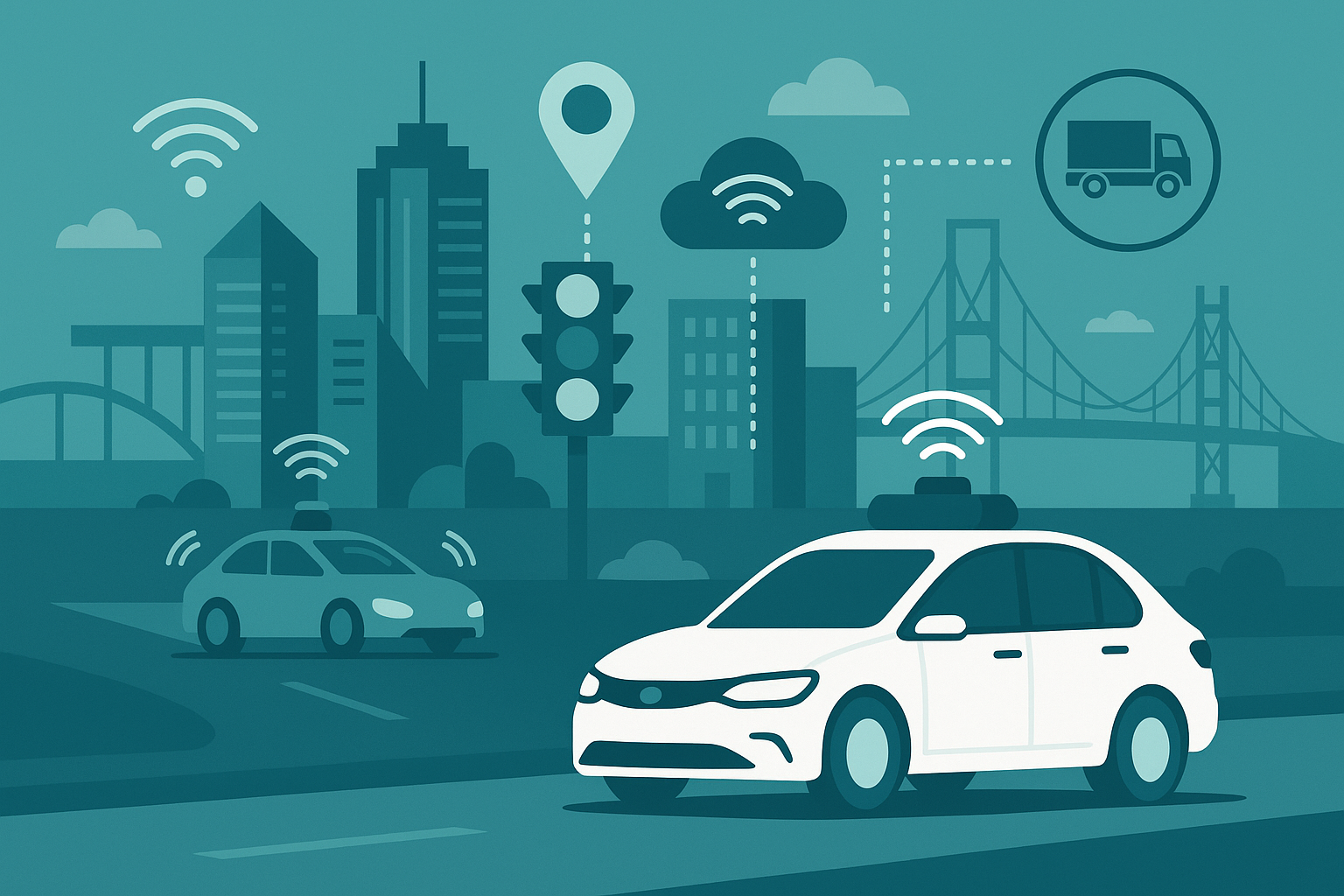
The autonomous mobility ecosystem in the United States has reached a pivotal stage of development.
AVIA’s inaugural Robotaxi Industry Report marks a shift from speculation to operational reality. For the first time, a comprehensive national overview of deployments, regulations, workforce impacts, safety trends, and investment flows is available. The data shows that robotaxis are moving from experimental projects to an essential part of transportation infrastructure.
However, the report highlights that the future of robotaxis depends less on the vehicles themselves and more on how effectively they are integrated into the broader transportation ecosystem, including fleets, urban areas, freight networks, emergency response, and the digital infrastructure connecting them.
The United States’ competitive advantage does not rest on developing the most advanced autonomous vehicle.
Rather, it derives from establishing the most interconnected and cohesive mobility ecosystem.
Robotaxi Deployment Is Outpacing Policy Development
AVIA’s findings show that robotaxi deployments are accelerating in several states, with major metropolitan areas expanding pilots into revenue-generating services. Cities that were previously hesitant are now developing operational frameworks, states are clarifying regulations, and insurers are actively engaging in the sector for the first time.
This degree of alignment across multiple sectors is unprecedented and signals the industry’s transition from concept to operational implementation. To accommodate autonomous vehicle integration, others lack fundamental permitting structures. In the absence of national harmonization on safety reporting, data transparency, and communication protocols, the growth of robotaxis will remain uneven and fragmented.
Interoperability, rather than isolated state policies, will ultimately determine national success.
As deployments increase, we must ask: Is autonomy alone enough?
While robotaxis are expected to improve safety and expand mobility, autonomy alone will not address congestion or roadway efficiency without investments in modern traffic management, connected corridors, and integrated fleet operations.
The report emphasizes a crucial point: autonomy represents only one component of a multifaceted transportation system.
A successful robotaxi ecosystem requires:
- V2X connectivity between vehicles and infrastructure
- Digital credentials that authenticate vehicles inside mobility zones
- Coordinated fleet dispatch across human-driven and autonomous vehicles
- Integration with transit, micro-mobility, and freight routing
- Real-time data exchange between AV providers and cities
- Clear emergency responder protocols for incident coordination
Robotaxis operating in isolation may improve individual mobility.
Robotaxis integrated into a broader ecosystem have the potential to transform urban mobility at scale.
Public Trust Will Depend on Transparency Rather Than Technology Alone
A key section of AVIA’s report addresses public perception and safety. It notes that autonomy does not have a PR problem; it has a transparency problem.
People don’t fear AV technology.
They fear the unknown.
Clear reporting standards, unified safety metrics, and open data partnerships between autonomous vehicle companies and local governments are essential to restore public confidence. Information about AV incidents should be shared through standardized, fact-based dashboards rather than viral media.
Robotaxis Will Transform the Labor Market, but Not as Critics Predict
Although public debate often centers on potential job losses, the report offers a more nuanced view: autonomy is more likely to transform work than eliminate jobs.
The robotaxi ecosystem is creating thousands of roles in:
- Remote operations
- Fleet maintenance
- AV mapping and calibration
- Data labeling and validation
- Infrastructure installation
- Incident response coordination
- Customer support and mobility assistance
Autonomy does not eliminate the workforce; it modernizes and redefines it.
It modernizes the workforce.
The central question is whether workforce development programs can be scaled rapidly enough to meet emerging demand.
The Next Phase: Integrating Robotaxis into the Digital Freight Infrastructure of the United States
Having worked in both the commercial fleet and connected vehicle sectors, I find the most striking insight in AVIA’s report is what it suggests but does not explicitly explore: the overlap between robotaxi corridors and commercial freight modernization.
The same technologies enabling robotaxis will underpin:
- Connected freight signal priority
- Digital weight & inspection (CVSA Level VIII)
- Autonomous yard logistics
- V2X-enabled tolling & credentialing
- Infrastructure-to-vehicle safety alerts for heavy trucks
Robotaxis represent the initial phase of a broader transformation in mobility.
Developing digital infrastructure for robotaxis will concurrently establish the foundational framework for the next generation of commercial logistics.
This presents an opportunity for the United States to gain a significant competitive advantage if recognized and acted upon.
For the United States to Lead in Autonomy, It Must Also Lead in Integration
AVIA’s inaugural robotaxi report is more than an industry snapshot; it serves as a strategic roadmap.
It shows where robotaxis are succeeding.
It identifies where policy is lagging.
And it highlights the interconnected future of mobility that AVs will depend on.
But the most important message is this:
America doesn’t need to win the autonomous vehicle race.
America needs to win the race for an autonomous ecosystem.
This requires building systems that allow robotaxis, commercial fleets, public transit, emergency responders, and city infrastructure to communicate in real time through a unified digital framework.
Because autonomy alone won’t transform transportation.
But connected, integrated autonomy will.
This future is now within reach. Decisive action is needed to position the United States as a global leader in connected, integrated mobility.