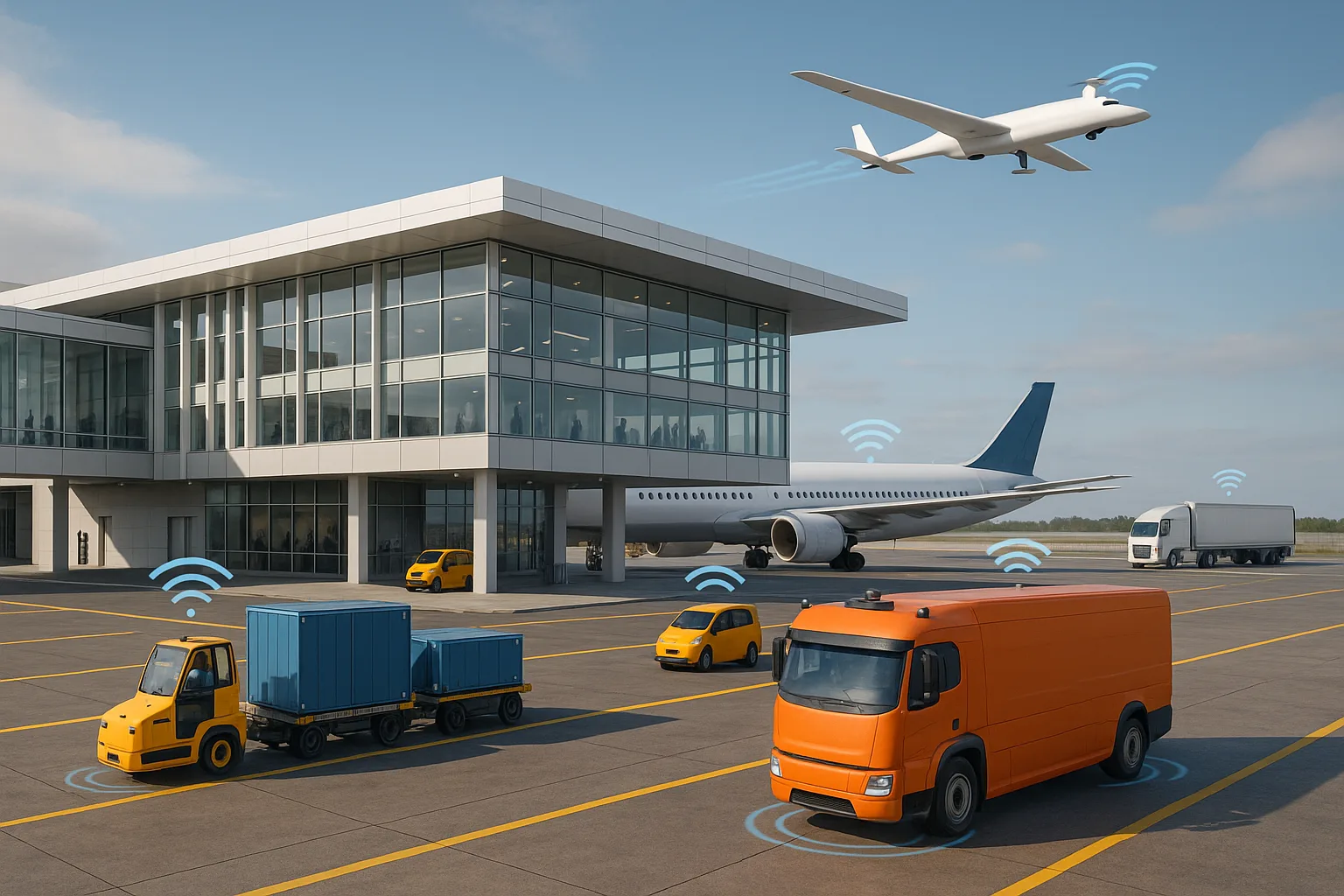
The $12 million AVP terminal expansion grant is more than local progress—it’s a signal that federal infrastructure investment is finally pivoting to support America’s changing freight future.
And frankly, it’s overdue.
A Modern Terminal Is More Than a Building — It’s a Platform
Representative Bresnahan’s funding announcement emphasised expansion, but the real story is how America’s airports are transitioning into intelligent digital freight hubs—an essential step toward a modern, connected transportation future.
A modern airport terminal is not just a physical asset. It’s a data hub. It’s a node in a nationwide supply chain that blends:
- Connected ground fleets
- V2X-equipped commercial vehicles
- Digital credentialing
- Autonomous support systems
- Integrated freight logistics
- Aviation operations that depend on real-time intelligence
This $12 million investment is evidence of a bigger shift: smart transportation infrastructure must move beyond silos to truly unify aviation and ground mobility in a connected freight system.
Freight Is the Quiet Force Driving Airport Modernisation
While passengers see security lines and gate upgrades, fleets see something different:
A gateway that determines whether freight moves efficiently or sits idle.
Airport modernisation directly supports:
- Faster turnaround for air cargo
- Reduced congestion in and around terminals
- Better visibility for logistics operators
- Opportunities for connected freight corridors feeding into the airport
- Interoperability with autonomous and semi-autonomous support equipment
When you have commercial fleets equipped with connected OBUs, BLE sensors, location-aware tags, and real-time data capabilities, the airport becomes one more high-value node for orchestration.
Smart airports reduce friction, boost velocity, and fortify supply chain resilience.
This Is What Federal-Led Innovation Should Look Like
Programs like this one show what happens when Washington invests in infrastructure that actually reflects modern mobility needs. They unlock:
- Digital-first airport operations
- Stronger collaboration between aviation + freight agencies
- Higher safety standards with sensor-rich environments
- Better preparedness for autonomous and electric aviation technologies
And, importantly, they provide local communities with an economic engine. Airports attract jobs, logistics activity, and long-term investment. A modernised AVP is a regional competitiveness win.
Aviation, Highways, & Freight Are Merging — Policy Needs to Keep Up
From autonomous vehicles to connected fleets to cargo tracking to V2X-equipped corridors, the lines between aviation, surface transportation, and digital mobility are blurring fast.
The federal government must update policies to support integrated infrastructure. Agencies should replace outdated categories with unified planning and funding models that connect aviation, highways, and rail. Cross-modal data sharing and interagency collaboration must become standard practice in infrastructure projects.
Upgrades like AVP’s modernisation need matching support in:
- Smart freight corridors
- Connected-commercial-vehicle credentialing
- Digital safety technologies
- V2X deployments
- Multimodal data-sharing frameworks
Investing in airports without investing in the connected systems that feed them is like upgrading a port without upgrading the trucks, rails, and logistics software that make it functional.
AVP’s Grant Is a Proof Point — But Also a Call to Action
This $12 million is meaningful, but it should be viewed as a launch pad, not a finish line. The U.S. transportation ecosystem needs modernisation end-to-end:
- Airports upgraded
- Highways digitally connected
- Freight fleets are digitally credentialed.
- Ports synchronised to real-time systems.
- The public and private sectors are aligned on interoperability.
With coordinated policy and technology choices, investments like this lay the groundwork for a unified, national connected freight network—which is central to future transportation leadership.
And this is where the next decade of innovation will be won.
Conclusion: Infrastructure That Thinks, Learns, and Works Together
Representative Bresnahan’s announcement marks progress toward a smarter national aviation policy. Airports must evolve into intelligent logistics platforms that serve the broader freight ecosystem, underscoring the need for further legislative support.
This is what modernisation looks like.
This is how we increase throughput, reduce friction, and build resilience.
And this is how America restores leadership in transportation innovation — by treating every upgrade not as a project but as part of a much larger, nationwide connected mobility strategy.